Equipment Guides
What Is an RGN Trailer?
An RGN, or removable gooseneck, trailer detaches at the front so heavy equipment can be driven on. Here is how RGN trailers work and what they are used for.
By Customer First Brokerage · · 5 min read
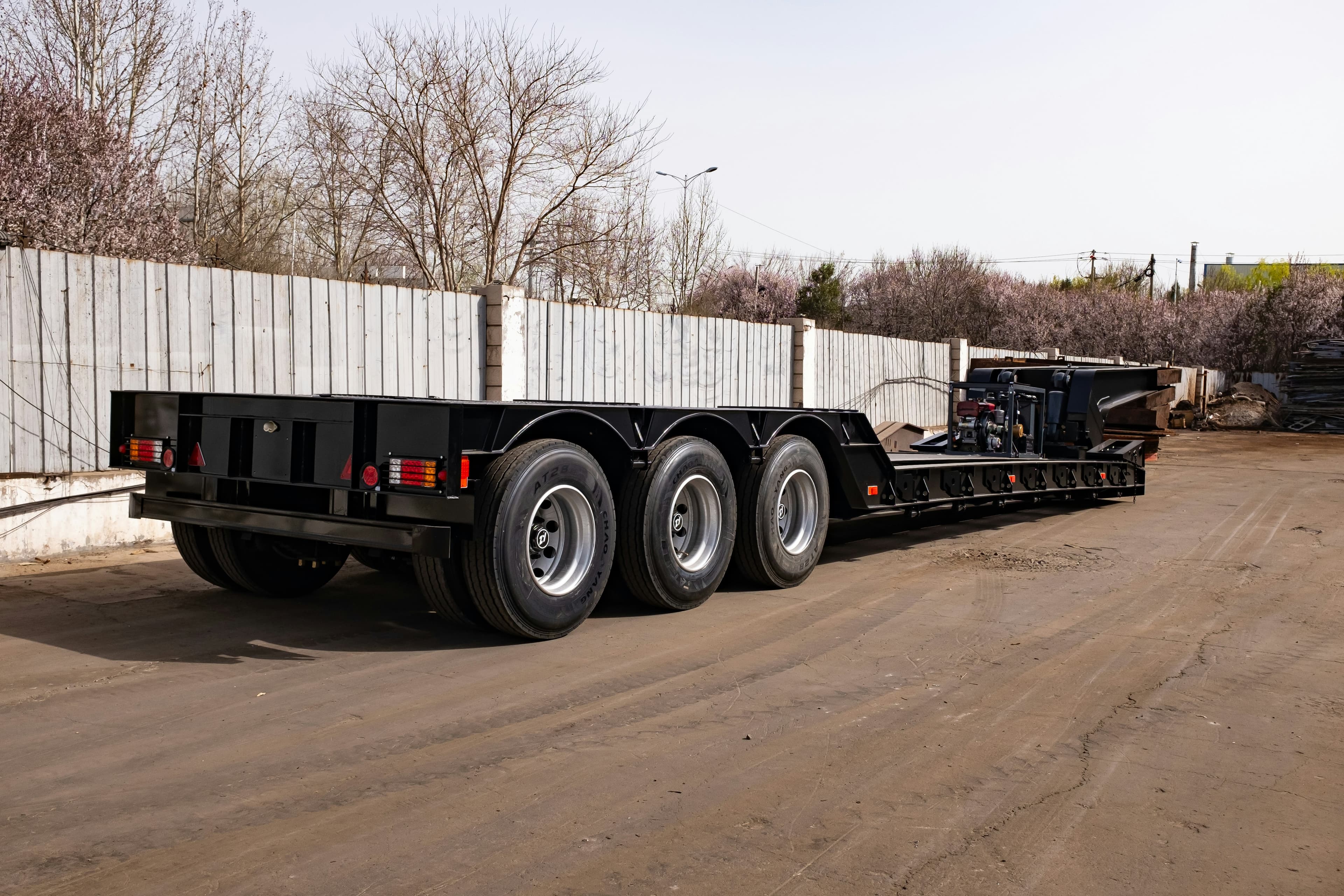
An RGN — short for removable gooseneck — is a low-deck trailer built to haul heavy equipment. Its defining feature is the front section, the gooseneck, which can be detached from the rest of the trailer. With the gooseneck removed, the front of the deck lowers to the ground and becomes a ramp. Equipment is then driven straight onto the trailer.
How loading works
- The driver lowers the trailer, usually hydraulically, and detaches the gooseneck while it stays connected to the tractor.
- The tractor pulls the gooseneck forward, leaving the front of the deck resting on the ground.
- The equipment is driven onto the deck under its own power.
- The gooseneck is reattached, the deck is raised to travel height, and the load is secured with chains and binders.
Because equipment drives on from the front, no crane or forklift is needed — a major advantage at construction sites, equipment yards and farms.
Height and capacity
The main deck, or well, of an RGN typically sits about 18 to 24 inches off the ground and is roughly 24 to 29 feet long. That low deck leaves room for equipment around 11 feet 6 inches to 12 feet tall within common legal height limits. Capacity depends on the trailer's axle configuration: common two- and three-axle RGNs carry roughly 40,000 to 42,000 pounds legally, while multi-axle configurations can carry considerably more under state permits.
What ships on an RGN
- Excavators and other track equipment
- Wheel loaders, backhoes and skid steers
- Dozers, graders and compactors
- Cranes and aerial lifts
- Agricultural and forestry equipment
- Industrial machinery and large components
RGN vs. step deck
A step deck's lower deck sits higher and loads from the side, from above or over rear ramps. An RGN sits lower and loads from the front. For equipment that is tall, heavy or easiest to drive on, an RGN is usually the better fit. For lighter or shorter freight, a step deck is often simpler and more widely available.
What to have ready for an RGN quote
- Make and model of the equipment
- Operating weight
- Transport length, width and height
- Attachments, buckets or counterweights that ship separately
- Whether the equipment runs and can be driven onto the trailer
- Access at pickup and delivery — ground conditions, space to unload